
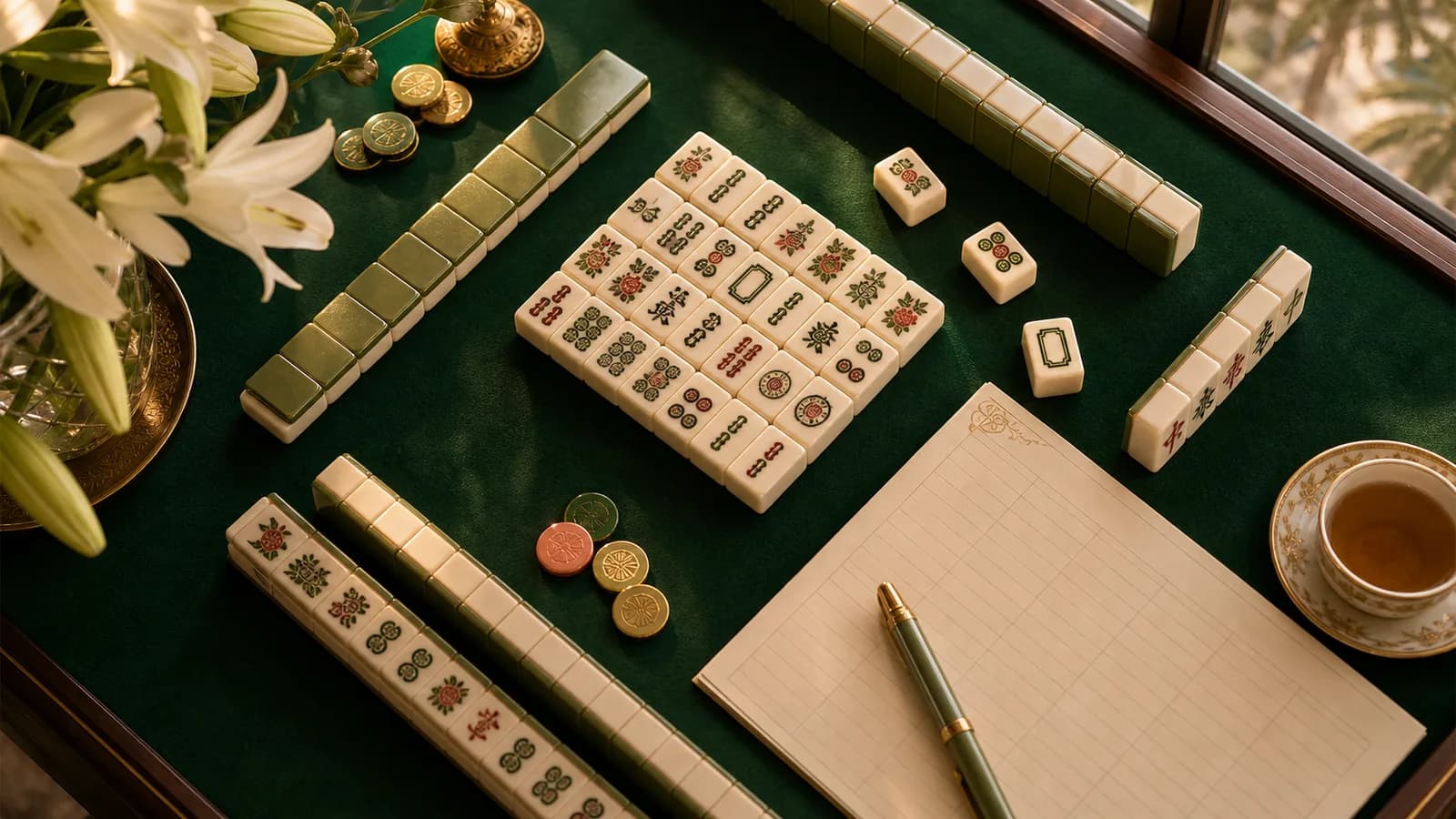
How does Mahjong scoring work for beginners?
Mahjong scoring depends on the rule set and house rules, but beginners should first learn what a complete hand looks like, which tile groups score, and how the table records points. Scoring makes more sense after the draw, discard, and hand-building rhythm is clear.
Most beginners want to understand scoring quickly because points make the game feel official. The problem is that scoring is the part of Mahjong that changes the most between styles.
A calm beginner table should not bury new players in every scoring exception. It should explain the pieces that matter today, then let the score sheet become familiar through live hands.
Learn the hand before the points
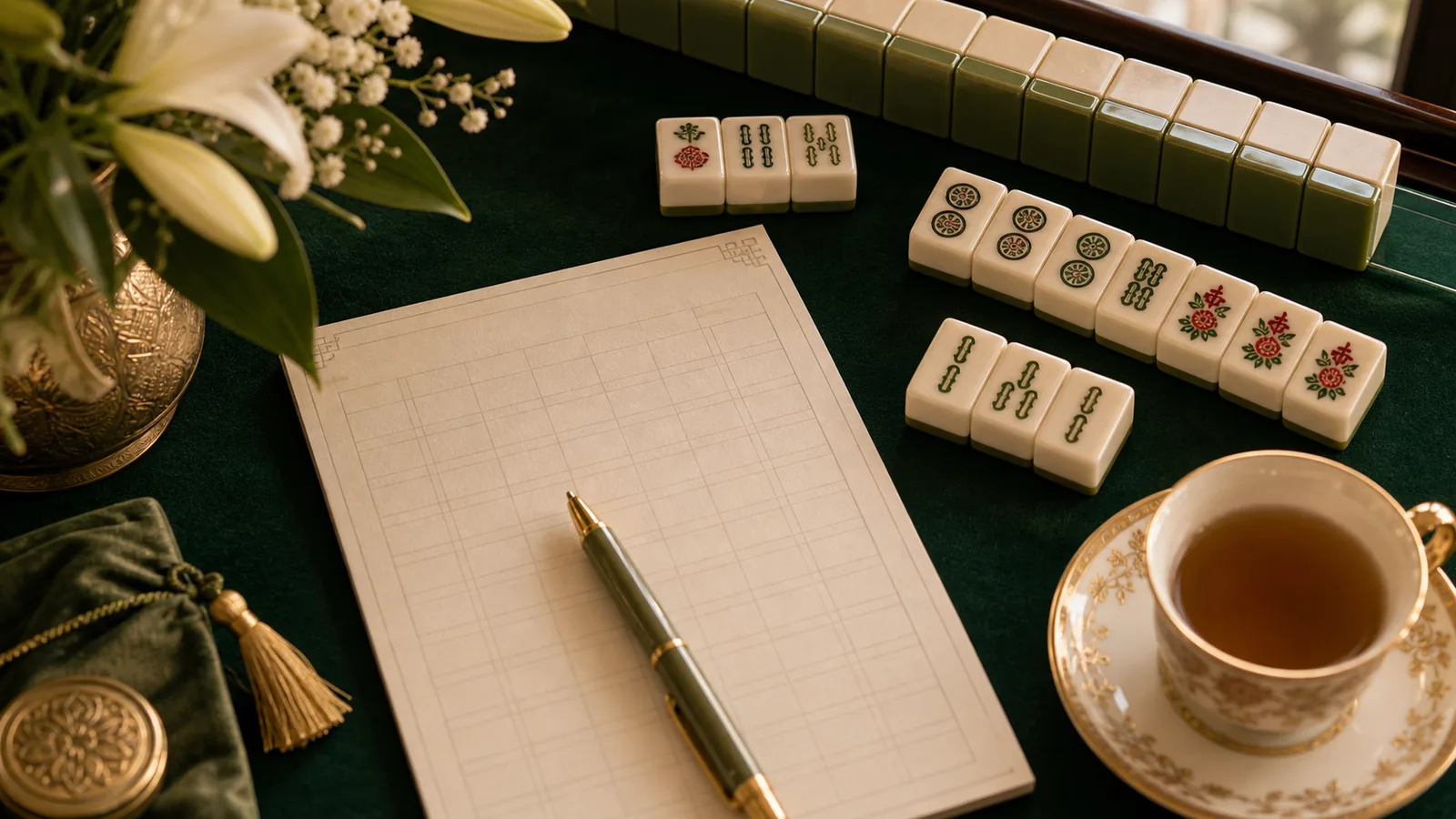
The first question is not, How many points is this? The first question is, Is this hand becoming something? Beginners improve faster when they learn what a useful group looks like before trying to count every bonus.
- A pair can matter because many hands need one.
- A set can be made from matching tiles, depending on the table rules.
- A sequence can matter in styles that allow suited runs.
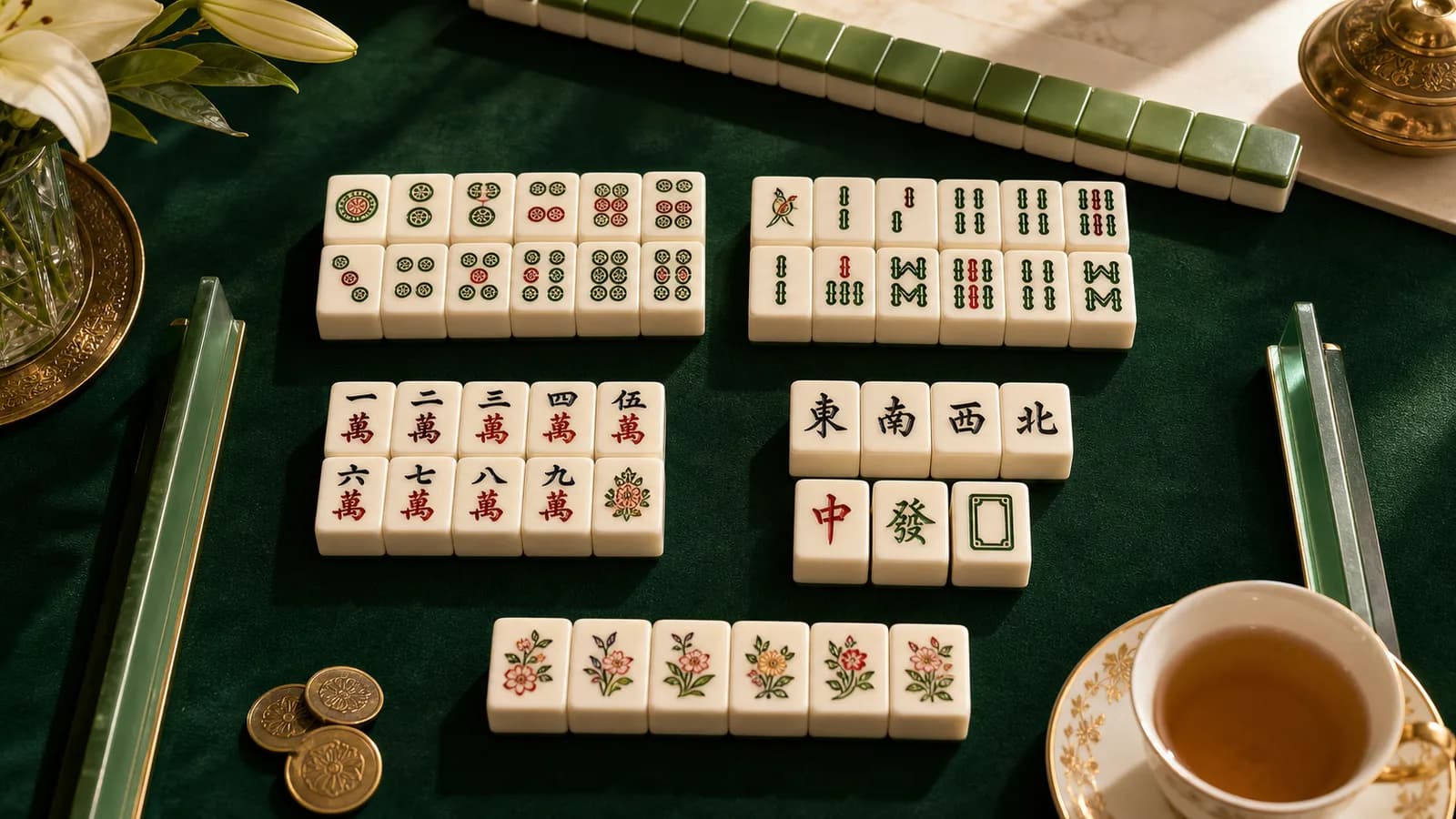
- Honor tiles may score differently from suited tiles.
- Flowers or bonus tiles should be handled according to the host's rules.
Why score sheets help
A score sheet gives the table memory. It keeps the lesson from becoming a blur and helps beginners connect the final hand to the points that were awarded.
In a Dubai class, a score sheet also slows the right moment down. After a hand ends, the host can point to what happened, show what counted, and explain what would have made the hand stronger.
What beginners should not worry about yet
Do not worry about mastering every scoring table from every Mahjong style. That is the fastest way to make a friendly game feel like homework. Learn the local table first, then compare styles later.
- Do not memorize advanced scoring before you can read tiles comfortably.
- Do not assume one online scoring guide matches the class you are taking.
- Do not chase a big score before you know how to keep the hand alive.
- Do not be embarrassed to ask why a hand counted.
The best next step after scoring basics
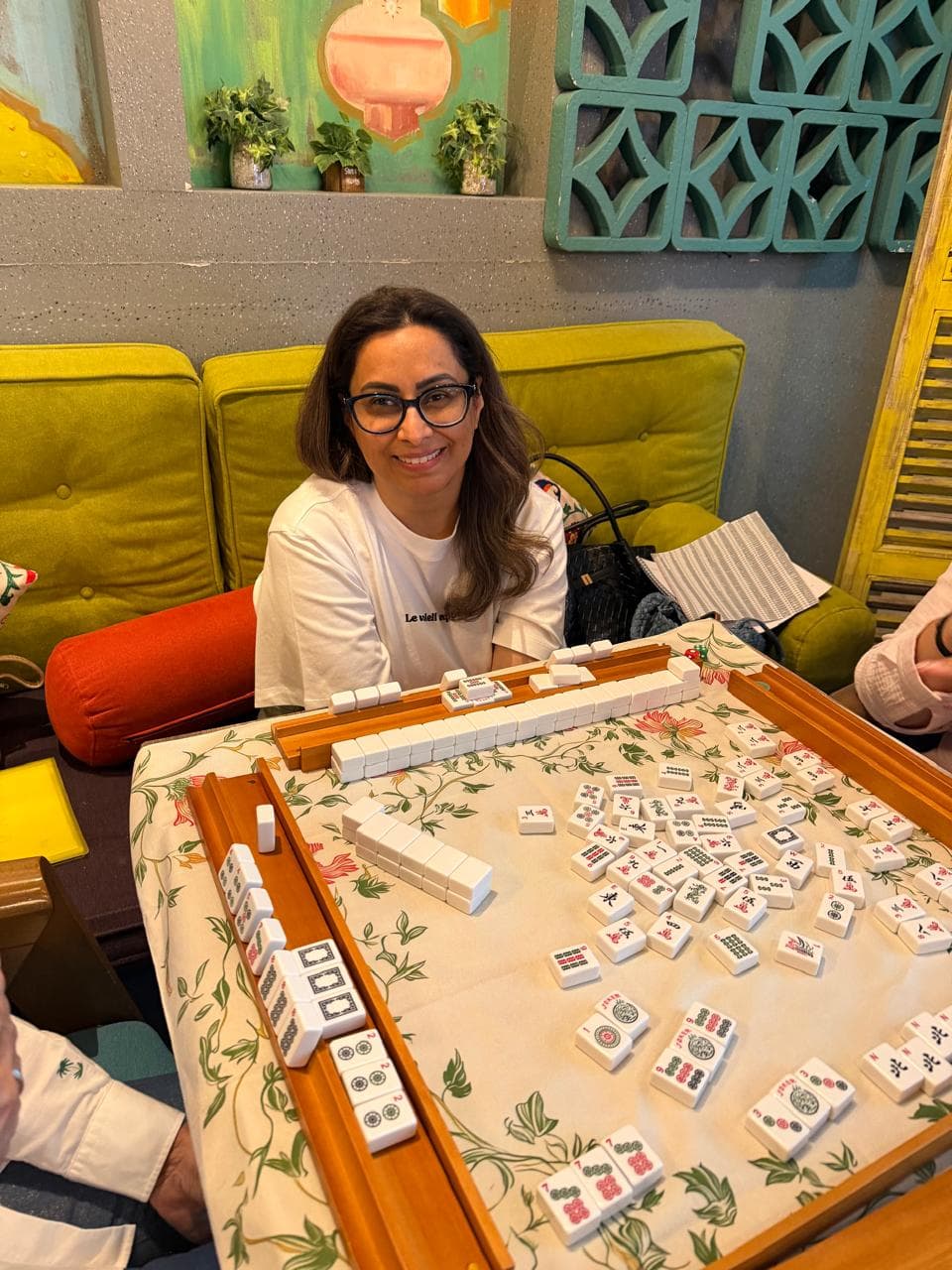
Once the score sheet feels less intimidating, Club play becomes the best teacher. You will start to see the tradeoff between a simple hand, a risky hand, and a hand that looks exciting but never quite arrives.
That is where Mahjong becomes interesting. Scoring is not just arithmetic. It is feedback on the choices you made before the hand ended.
Frequently asked questions
Is Mahjong scoring the same in every style?
No. Mahjong scoring changes by rule set and house rules, so beginners should learn the scoring used at their table first.
Should I learn scoring before my first Mahjong class?
No. Learn tile recognition and table flow first. Scoring is easier once you can see how a hand is built.
What is the easiest way to understand Mahjong points?
Play supported hands, then review the score sheet immediately after the hand ends. That connects the points to real decisions.
Related guides

About the author
Neha Bali
Hi, I'm Neha. I'm a certified Mahjong teacher in Dubai with 15 years of Mahjong experience. I host classes, Club sessions, and tournaments for players who want clear rules, steady practice, and a friendly table to return to.