
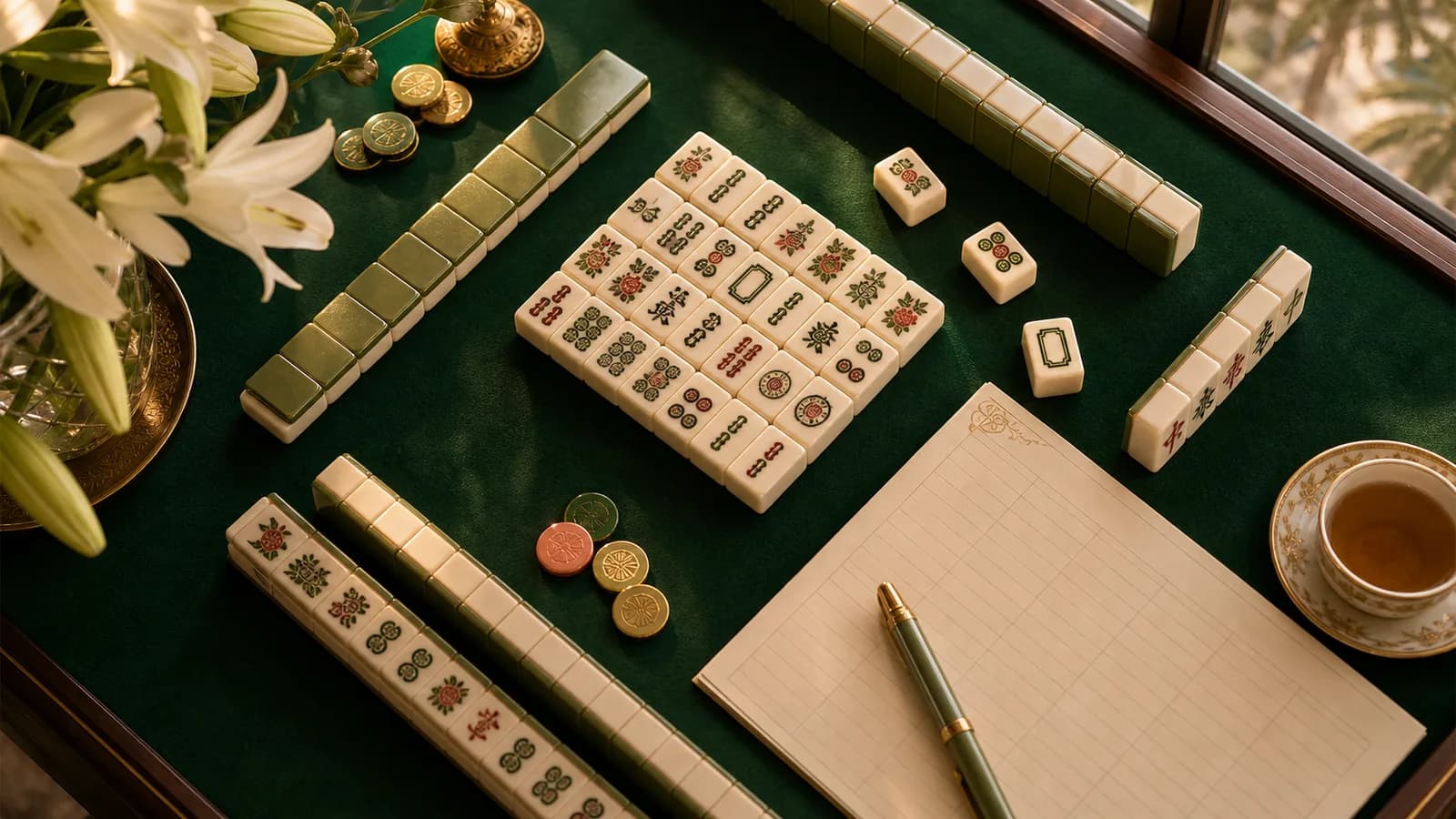
What are the different Mahjong tiles?
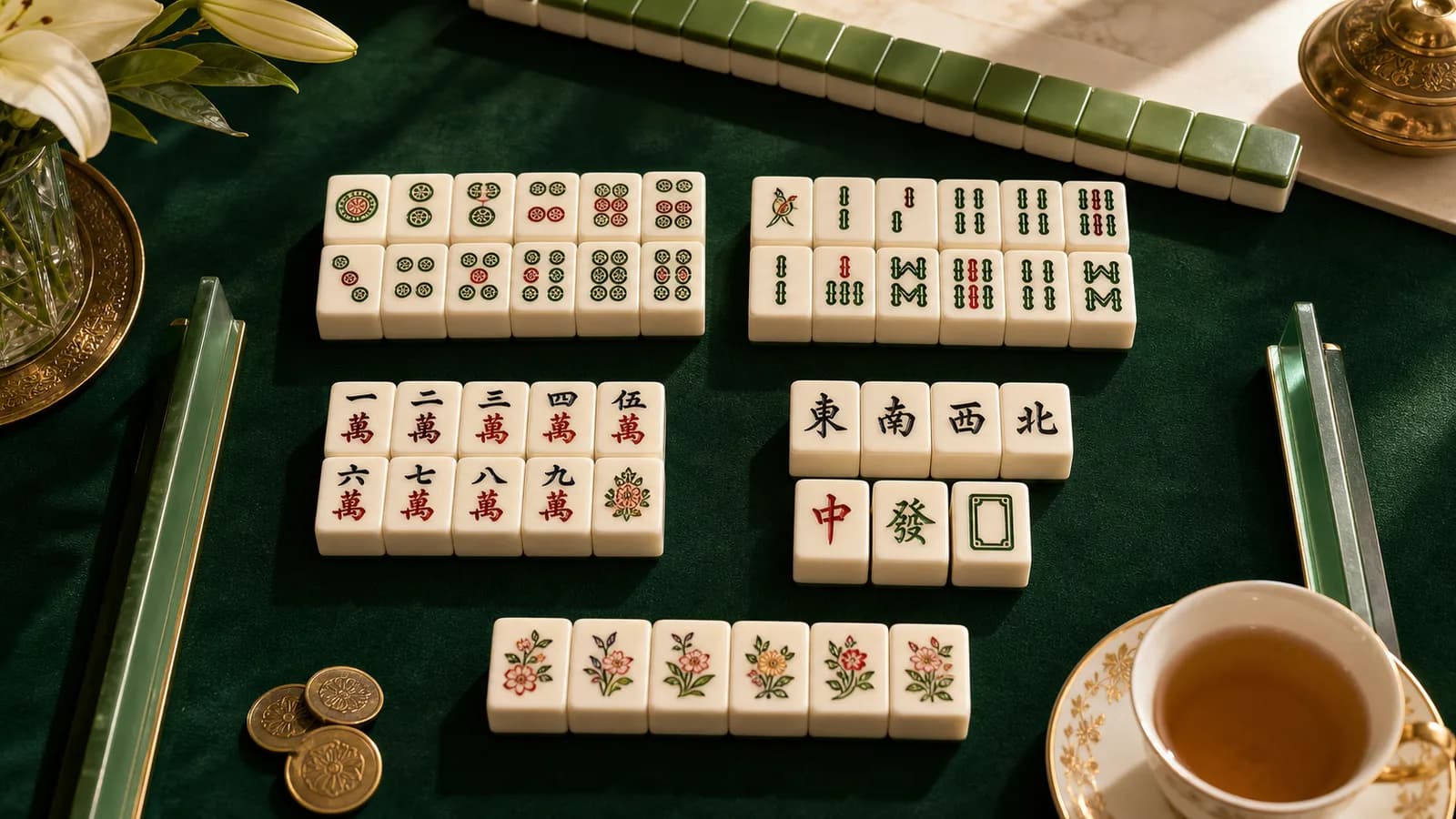
Most Mahjong sets include suited tiles, honor tiles, and bonus tiles such as flowers or seasons. Beginners should learn the three suited families first, then recognize winds, dragons, and flowers. Once the tile groups are familiar, the table becomes much easier to follow.
The first time you sit at a Mahjong table, the tiles can look like a tiny language you were expected to know already. That feeling is normal. The trick is not to memorize every symbol at once. Start by sorting the tiles into families.
At a beginner table, tile recognition is the first big relief. Once you can tell what belongs with what, the rest of the lesson has somewhere to land: hands, discards, score sheets, and table rhythm all become less abstract.
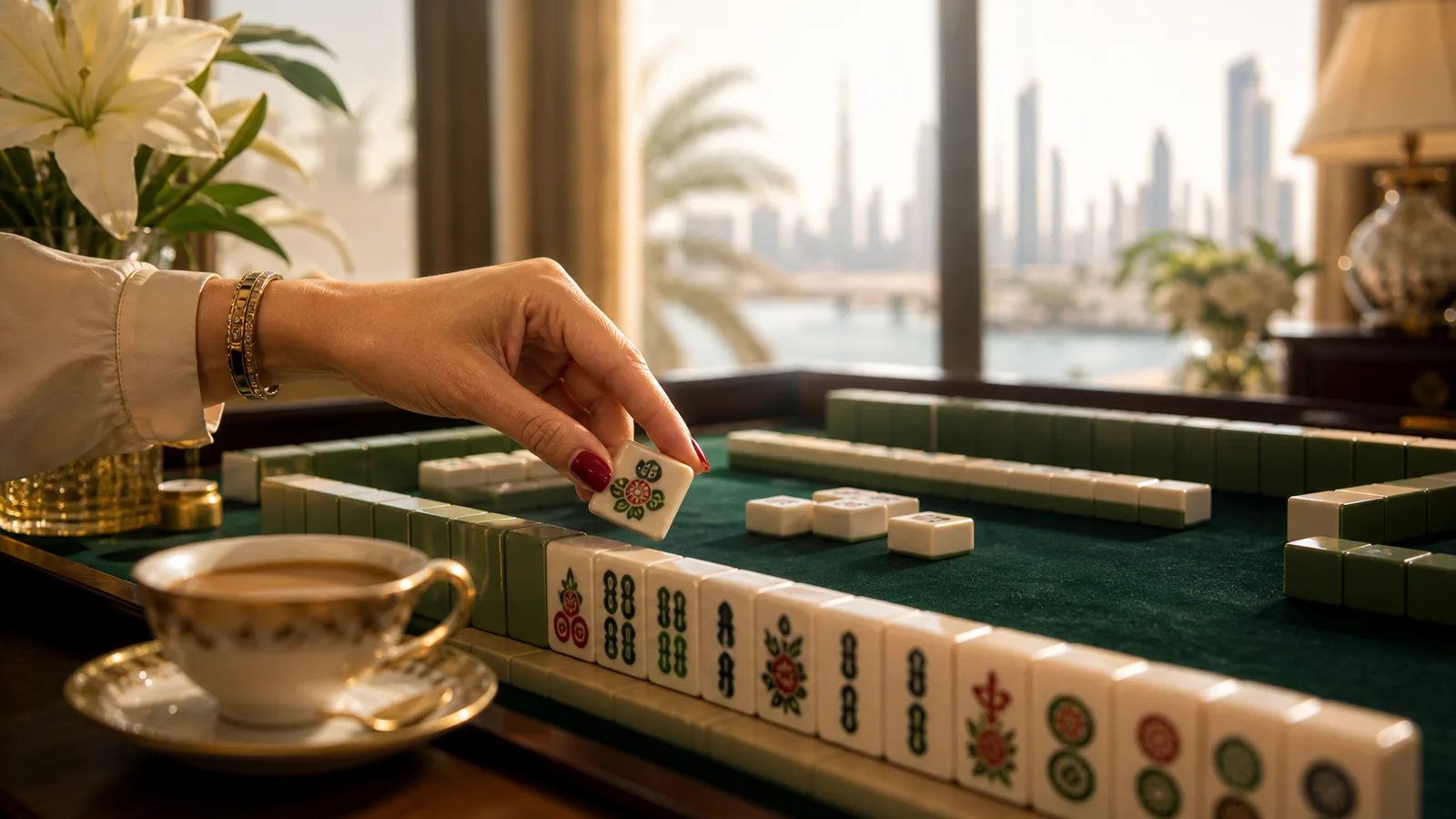
The suited tiles: the ones you meet most often
The suited tiles are the numbered tiles. They usually form the backbone of the hand because they can create patterns, runs, and groups depending on the rule set being used.
- Dots or circles: numbered tiles that are often easy for new players to count.
- Bamboo or sticks: green-lined tiles, with the one bamboo often drawn differently from the rest.
- Characters: numbered tiles with Chinese characters, usually the slowest suit for beginners to read at first.
- Numbers one to nine appear in each suit, with multiple copies in the set.
Honors and flowers: the tiles that feel special
Honor tiles usually include winds and dragons. They do not behave like numbered suited tiles, so beginners should treat them as their own category rather than trying to force them into a sequence.
Flowers and seasons depend on the table rules. Some tables use them for bonus points, some teach them slowly, and some explain them only once the basic flow is comfortable. This is another reason house rules matter.
How to practice tile recognition without overstudying
You do not need flashcards unless you enjoy them. A few simple habits help more than staring at a chart for an hour. Put similar tiles together, say the family name out loud, and notice which tiles slow you down.
- Start by separating suits, honors, and flowers.
- Read the number before thinking about the full hand.
- Keep character tiles beside their matching number until your eye learns them.
- Ask the host to name tiles during the first few hands.
- Practice at a real table because speed comes from repetition.
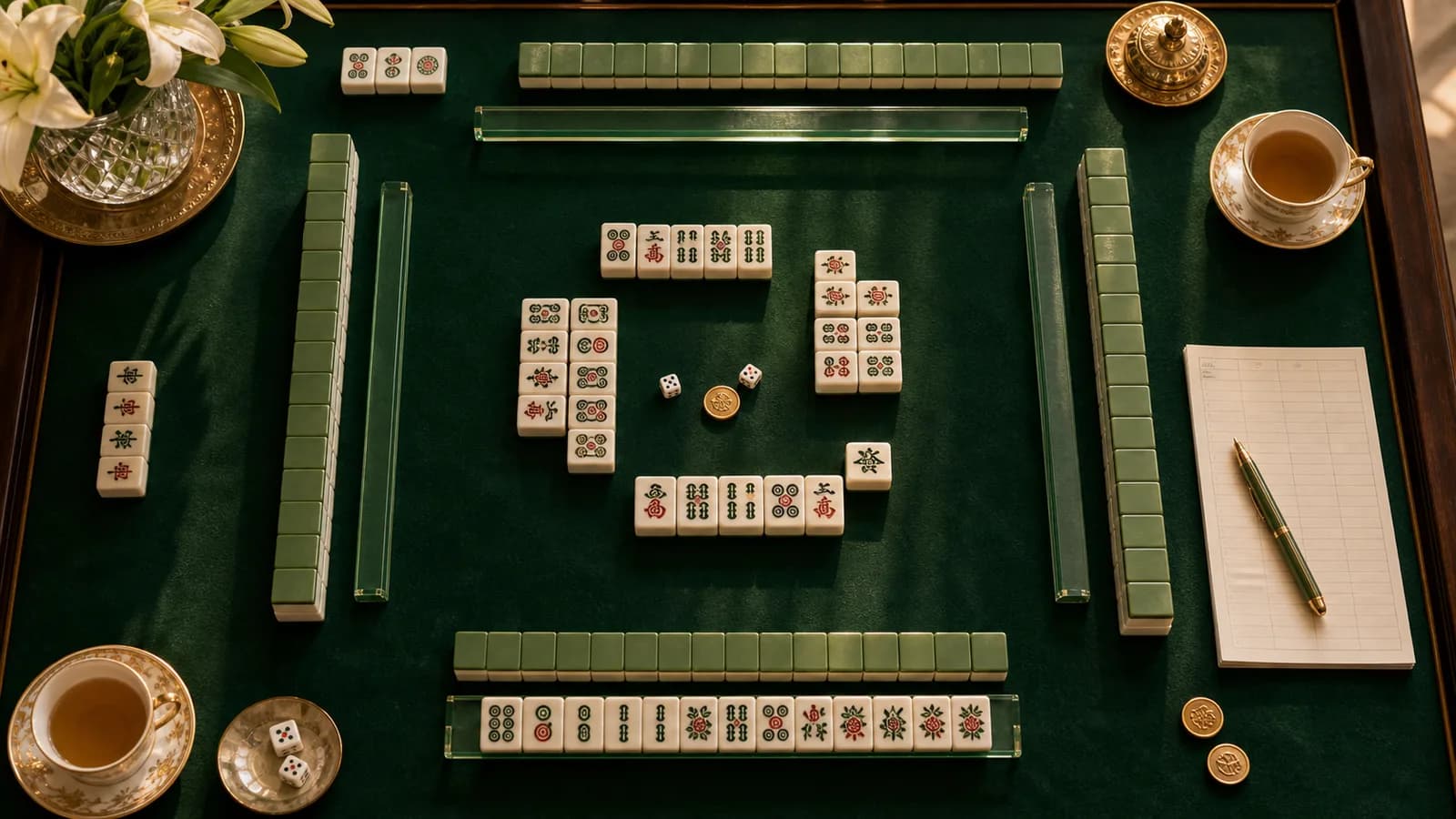
Why tiles are easier in a hosted class
A hosted class lets you ask the small questions that are hard to search: which symbol matters, which tile is a flower, why a tile was kept, and when a tile is no longer useful. Those answers are the difference between looking at tiles and reading a table.
For Dubai beginners, the goal is comfort first. Once the tile groups feel familiar, you can move into Club play, scoring, and better decisions without feeling like every turn starts from zero.
Frequently asked questions
How many tile groups should beginners learn first?
Start with three broad groups: suited tiles, honor tiles, and flower or bonus tiles. That is enough to follow the first lesson.
Which Mahjong tiles are hardest for beginners?
Character tiles are often hardest at first because new players may not read the symbols. Repetition at the table helps more than memorizing in isolation.
Do all Mahjong classes use flowers?
Not always in the same way. Flower use depends on the house rules and style being taught, so ask the host before comparing rules from another table.
Related guides
About the author
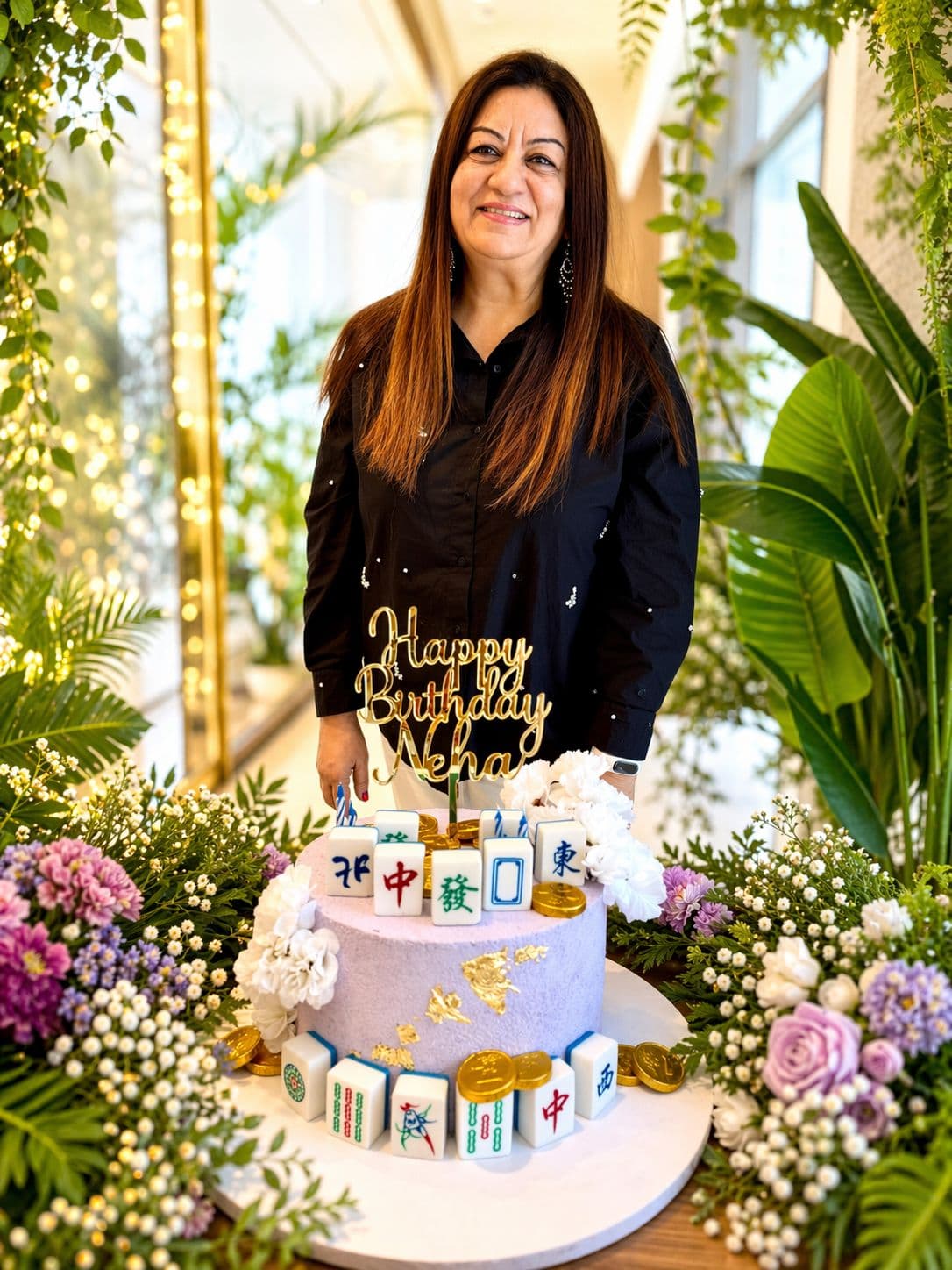
Neha Bali
Hi, I'm Neha. I'm a certified Mahjong teacher in Dubai with 15 years of Mahjong experience. I host classes, Club sessions, and tournaments for players who want clear rules, steady practice, and a friendly table to return to.