
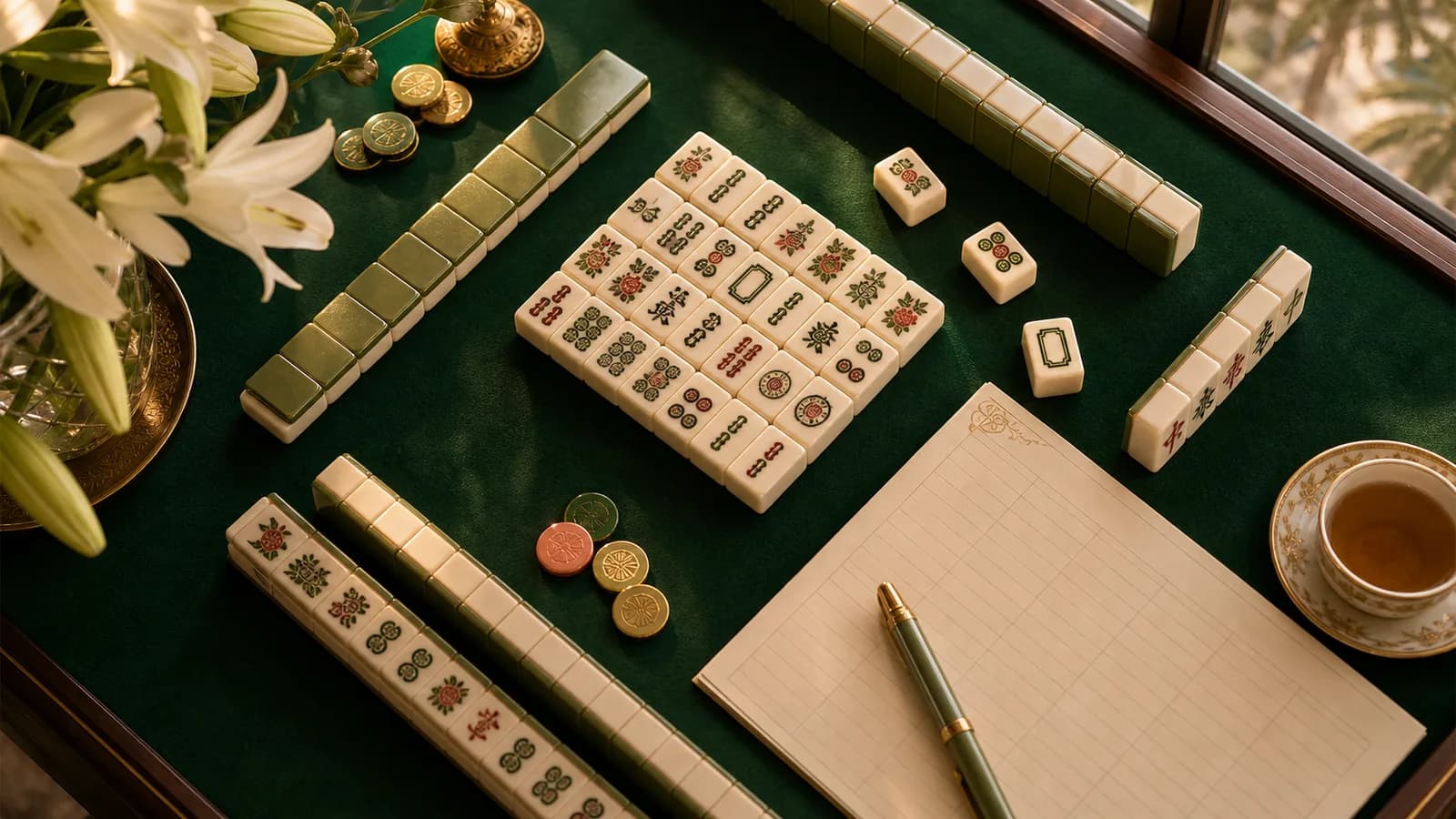
What is Goulash Mahjong?
Goulash Mahjong is not one universal ruleset. In traditional British-style rules, it is a special replay after a drawn hand, usually with tile exchanges and table-specific restrictions. In Indian and some Dubai circles, Goulash can instead mean a structured round with defined hand patterns and scoring. Confirm the variant before play.
At Mahjong World Dubai, the course is called Asian (Goulash and Hands) - Dubai Style, also known as ATF in Dubai. It is a 13-tile social game with flexible play, half-limit and limit hands, and the house rules used at the class table.
That local wording matters. Some Mahjong books use goulash for a special hand played after a draw, while other groups use it for a broader family of hands or a round with exchanges. A rule page that ignores that difference can sound precise and still teach you the wrong table.
How do you play a traditional Goulash round?
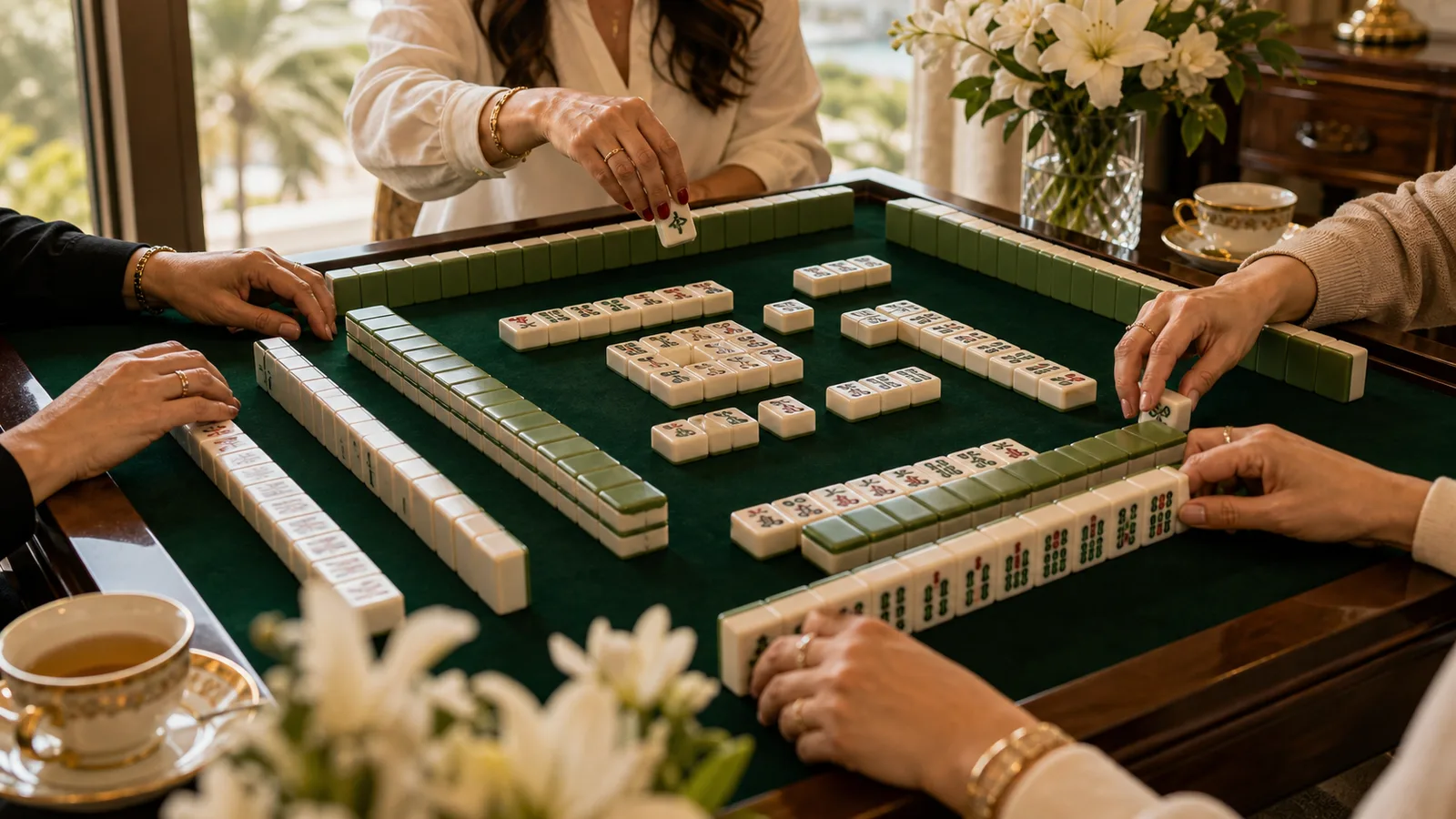
A traditional Goulash round usually begins after a hand ends without a winner. The table confirms its house rules, may add wild or joker tiles, completes a staged exchange of unwanted tiles, and then resumes normal drawing and discarding with any agreed restrictions. The exact exchange directions, chow rules, and scoring vary.
The sequence below describes a common drawn-hand version found in published British-style rules. It is not the same as every Indian or Dubai Goulash table, so agree on the variant before rebuilding the wall.
- Confirm that the drawn hand triggers a Goulash replay under the table's rules.
- Confirm whether the dealer, seats, and prevailing wind remain unchanged.
- Add any joker or wild tiles used by that variant.
- Exchange three unwanted tiles in each of the table's stated stages and directions.
- Resume drawing and discarding with the agreed restrictions, which may include no chows.
- Score the completed hand using the house rules agreed before play.
Core ideas beginners should understand first
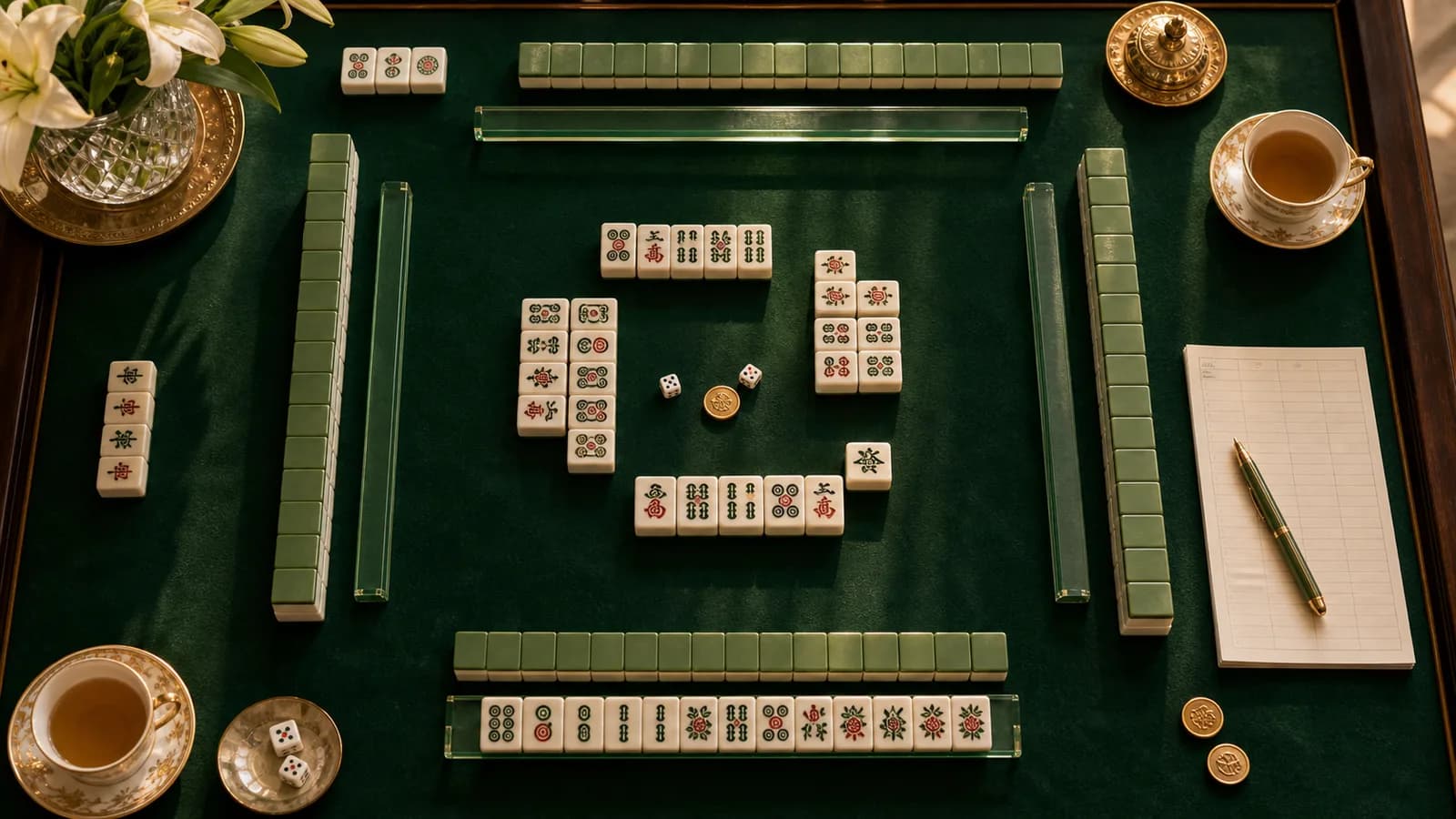
Before scoring becomes important, beginners need to see the structure of the game. These ideas come up in almost every lesson and make the rest of the rules easier to absorb.
- The wall is the tile structure players draw from during the game.
- The rack holds the tiles you are considering for your hand.
- A discard is the tile released into the center after a player finishes a turn.
- A set is a useful group of tiles that helps shape a complete hand.
- A ready hand means you are close to Mahjong and waiting on one or more useful tiles.
- House rules define the exact scoring, special hands, and local table habits.
How do Goulash Mahjong rules differ by table?
There is no single worldwide Goulash rule set. In some traditions, a goulash is the extra hand played after nobody wins. In Indian and Dubai social circles, the word can also point to a structured round, special hand patterns, exchanges, and local scoring conventions.
The Indian Mahjong League rulebook, for example, labels its West Round as Goulash and lists the winning shapes and exchange rules used in that format. Published British-style guides instead describe Goulash as a replay after a drawn hand. Your Dubai host may use related ideas with her own class-table conventions.
- Traditional British-style Goulash: commonly follows a drawn hand and may use staged exchanges, jokers or wild tiles, and a no-chow restriction.
- Indian Mahjong League Goulash: the West Round uses listed hand shapes, exchange rules, and scoring values.
- Mahjong World Dubai: Asian (Goulash and Hands) - Dubai Style is taught with the house rules used at the class table.
- Before play: confirm the trigger, exchanges, permitted calls, wild tiles, flowers, winning shapes, and scoring.
What is included in a Dubai Goulash Mahjong course?
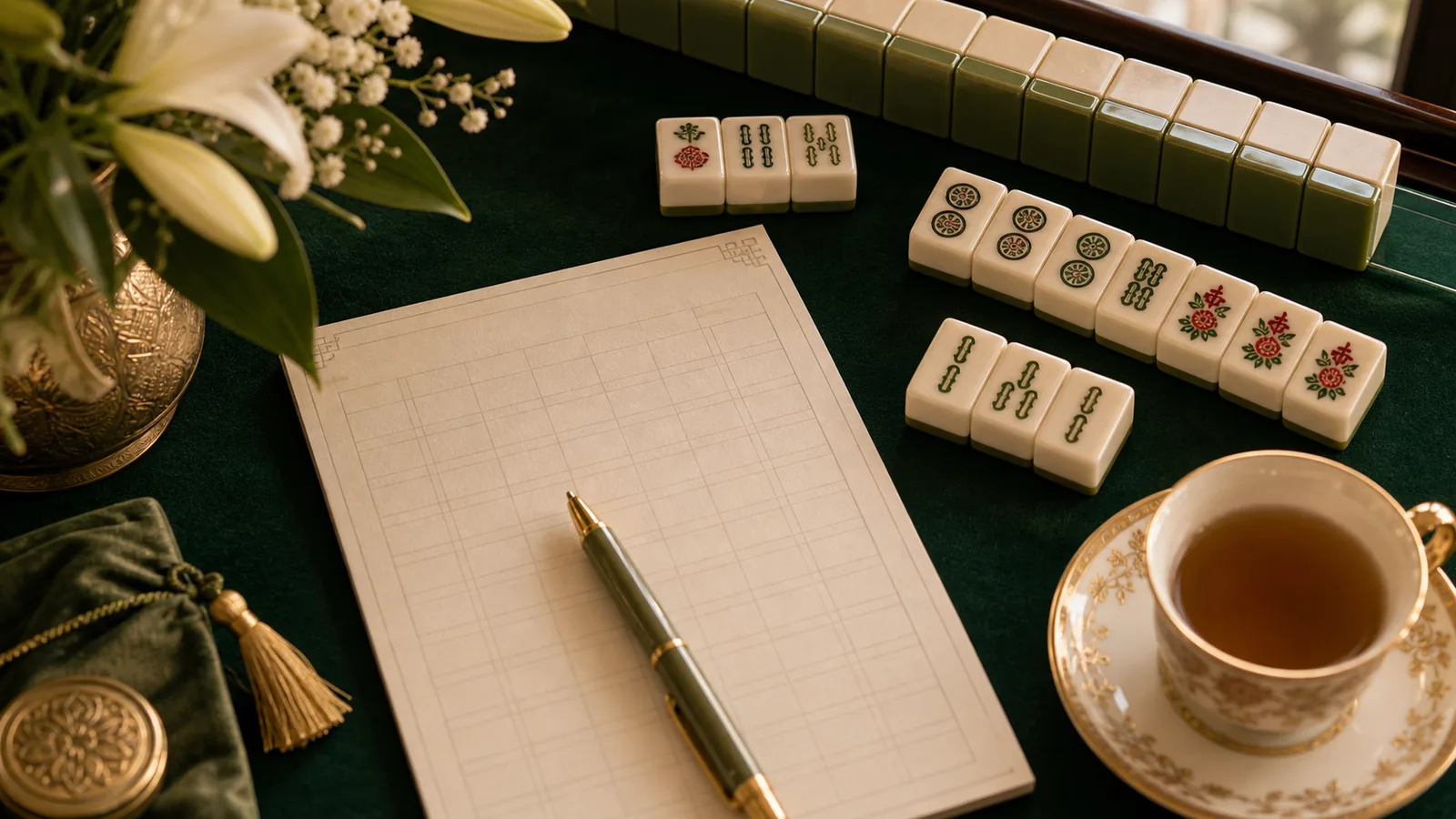
Mahjong World Dubai teaches Asian (Goulash and Hands) - Dubai Style over four two-hour classes. The AED 600 course includes notes and uses live hands to connect the terminology to the decisions happening on the table.
- Four classes, two hours each
- AED 600 course fee with notes included
- Tile recognition, hand structure, calls, and table rhythm
- Goulash, half-limit and limit hands
- House rules and scoring used at the class table
- A clear next step into Club practice
How a Goulash Mahjong hand starts to make sense
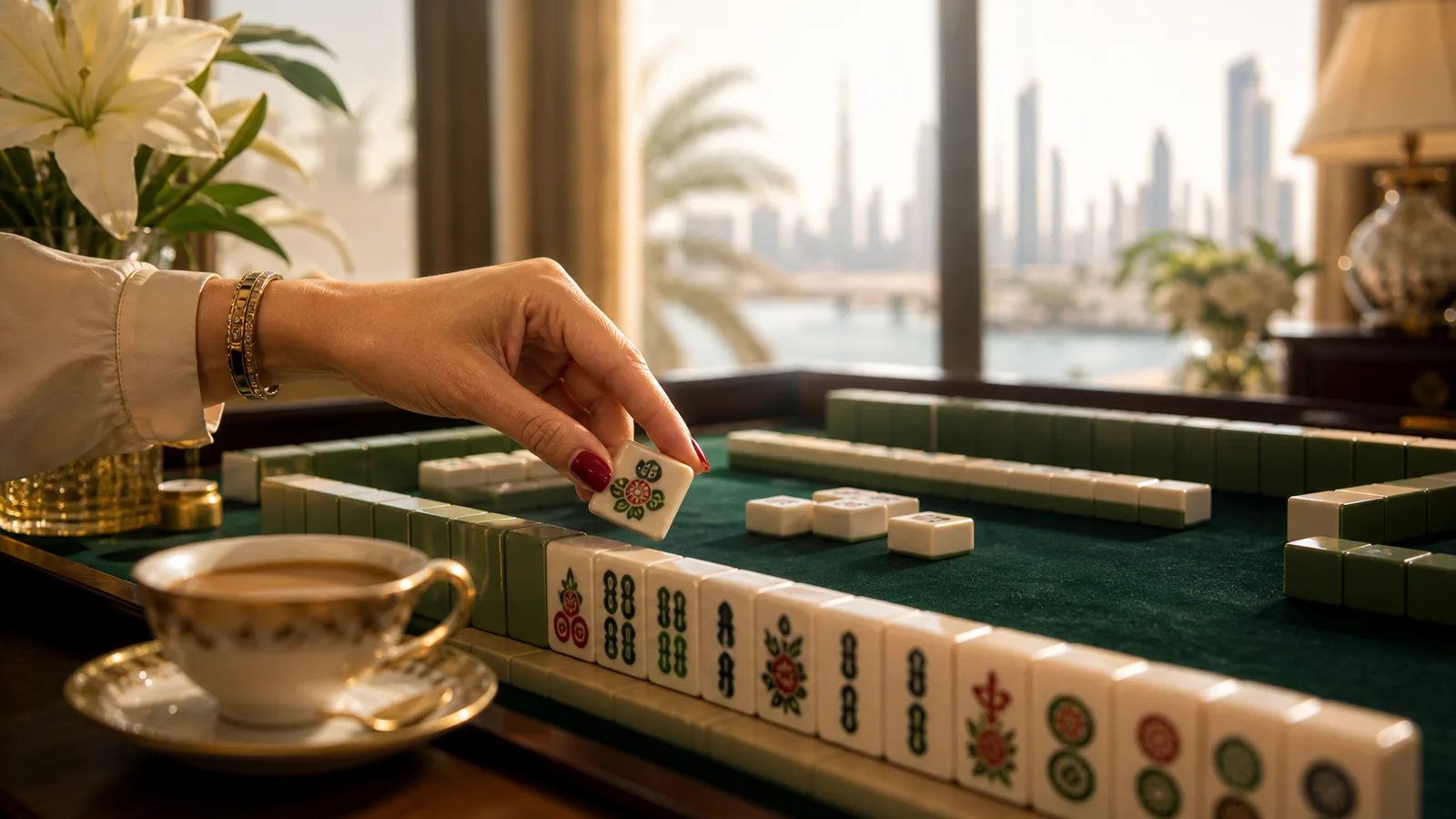
A beginner usually starts by seeing individual tiles. With practice, the table starts to look like relationships: what belongs together, what is becoming useful, and what no longer helps the hand.
This is why Club play is valuable once the basics are familiar. During live rounds, you learn why one discard is safer, why one tile is worth holding, and how to watch the table without overthinking every move.
Why house rules matter
Mahjong players can use the same tiles and still play different versions of the game. A beginner should not worry about mastering every global variation. Start with the table in front of you.
At Mahjong World, the practical approach is to explain the rules used in class, then repeat them through real hands. That keeps the lesson grounded and avoids the common beginner problem of mixing advice from several rule sets.
The easiest way to improve after learning the rules
Once you know the tile families and basic turn rhythm, improvement comes from repeated play at the table. The best next step is not more theory. It is sitting at a real table, hearing the same terms, and making small decisions with support.
A strong class should leave you able to join a friendly table, follow the action, and ask better questions. That is the bridge between knowing the rules and feeling comfortable enough to play socially.
Frequently asked questions
Are Goulash Mahjong rules the same everywhere?
No. Mahjong styles and house rules vary, so players should confirm the rules used by the host before comparing scoring or special hands.
What should beginners learn before scoring?
Beginners should first learn tile families, turn order, racks, discards, simple sets, and the table rhythm. Scoring becomes easier after the game flow is familiar.
Can I learn Goulash Mahjong in one session?
You can learn the foundation in one session, but confidence usually comes after Club sessions and repeated hands at a real table.
Sources and further reading
Related guides

About the author
Neha Bali
Hi, I'm Neha. I'm a certified Mahjong teacher in Dubai with 15 years of Mahjong experience. I host classes, Club sessions, and tournaments for players who want clear rules, steady practice, and a friendly table to return to.